Medical Nutrition Therapy
Supports patients with complex clinical conditions through evidence-based nutrition interventions and ongoing care planning.

You’re competing for nutrition coverage in a market shaped by increasing patient demand, the rise of virtual care, and growing specialty needs. Medix helps healthcare organizations stay ahead.
We place Registered Dietitians 70% faster than the staffing industry average, backed by nationwide reach and 20+ years of staffing experience.
Average Time-to-Fill
RDs in Network
Joint Commission-certified
Today’s Registered Dietitians support far more than meal planning and dietary guidance. Their impact extends across clinical operations, patient outcomes, compliance initiatives, and chronic disease management.
Supports patients with complex clinical conditions through evidence-based nutrition interventions and ongoing care planning.

Helps healthcare organizations improve documentation accuracy, quality initiatives, and reimbursement-related outcomes.

Supports patients managing diabetes, renal disease, cardiovascular conditions, oncology care, and obesity-related health concerns.

Collaborates with physicians, nurses, care managers, and clinical teams to support coordinated patient care.

Supports nutrition screening, assessments, and documentation expectations tied to CMS and Joint Commission standards.

Expanding across outpatient, telehealth, and hybrid care models supporting chronic disease and long-term nutrition management.

Registered Dietitian hiring has become more nuanced as healthcare organizations balance patient outcomes, documentation expectations, workforce shortages, and evolving care models.

Registered Dietitians are increasingly influencing malnutrition documentation, chronic disease management, discharge planning, and quality initiatives—not just carrying out physician-directed diet changes.

Healthcare organizations are facing multiple micro-shortages across specialties like renal, oncology, bariatrics, and critical care. Specialized experience, patient acuity, and documentation requirements all affect how difficult these roles are to fill—and how organizations are rethinking dietitian staffing ratios.

Many RDs feel compensation has not kept pace with increasing education requirements, clinical responsibility, and documentation expectations—especially after the 2024 master’s degree requirement took effect for new RDs/RDNs.

Many experienced RDs are moving toward outpatient care, telehealth, and private practice opportunities that offer greater flexibility and autonomy than traditional inpatient settings.
Healthcare systems are now competing against entirely different career paths, not just other hospitals.
While the terms are often used interchangeably, Registered Dietitians and nutritionists have important differences in education, credentialing, clinical training, and scope of practice. Understanding those distinctions can help organizations hire the right nutrition professional for clinical care, medical nutrition therapy, wellness programs, and more.
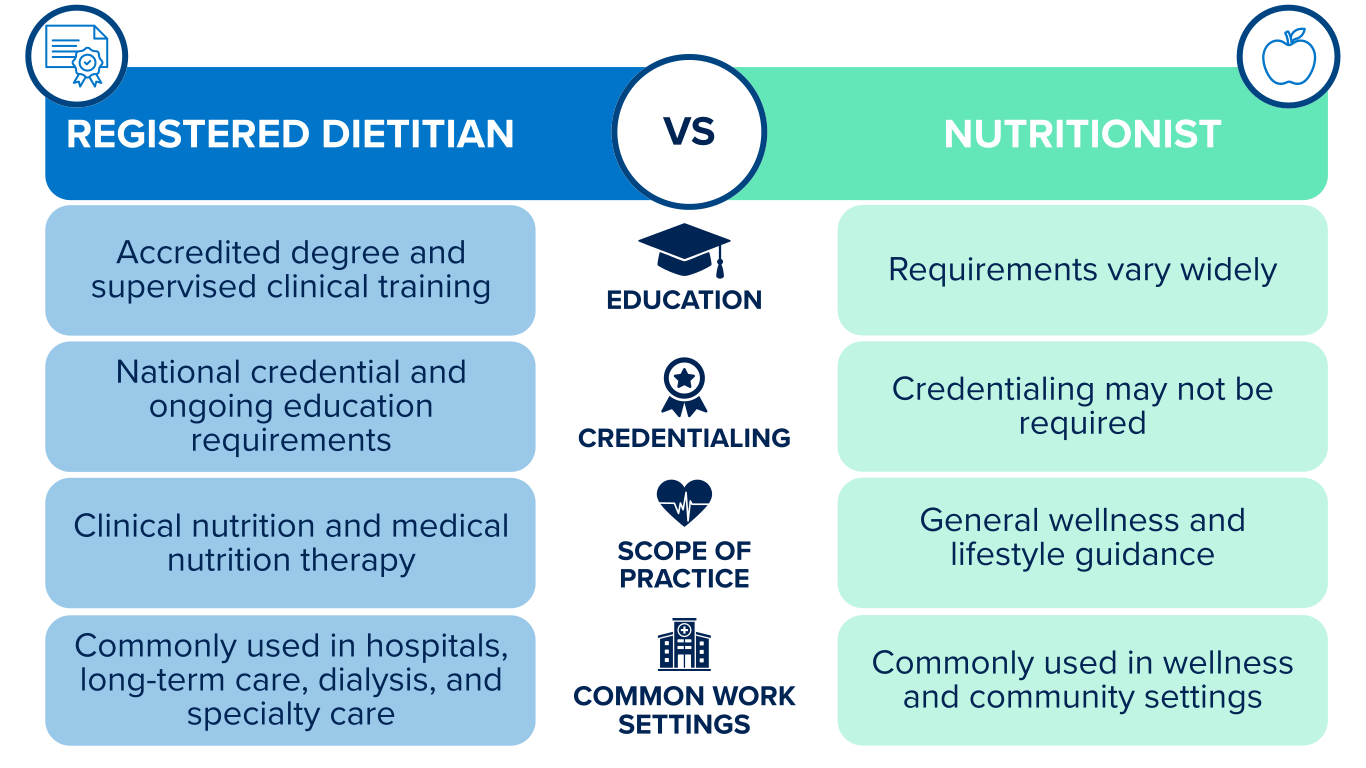
This is where nutrition staffing gets complicated. Nutrition-related titles and credentials are often grouped together, even though the education, licensure, and clinical qualifications behind them can vary significantly.
Here are some of the most common credentials healthcare organizations encounter during the hiring process.
The nationally recognized credential for dietitians who complete accredited education, supervised clinical training, and ongoing continuing education requirements. As of 2024, new RDs/RDNs are also required to hold a master’s degree before qualifying for credentialing. Registered dietitians are qualified to provide medical nutrition therapy (MNT) and clinical nutrition care across healthcare settings.
An advanced nutrition certification for professionals who complete graduate-level nutrition education, supervised practice, and board certification requirements. CNS professionals are commonly associated with functional, integrative, wellness, and private practice nutrition settings.
A specialty credential focused on diabetes prevention, management, and patient education. Registered dietitians, nurses, pharmacists, and other qualified healthcare professionals may earn CDCES certification to support chronic disease management and long-term patient care initiatives.
A state-issued licensure designation that authorizes dietitians to practice within a specific state. Requirements vary by location and may include RD credentialing, continuing education, and state registration.
A state licensure designation similar to LD that authorizes professionals to provide nutrition care within certain states. Some states use LDN instead of LD depending on local regulatory requirements.
A state-regulated credential used in certain regions, including New York, for dietitians who meet specific education, examination, and certification requirements.
Nutrition staffing has become more specialized, which means generic job descriptions often attract the wrong candidates—or create confusion around qualifications, credentials, and clinical expectations.
Clear role definitions help healthcare organizations align hiring requirements with patient care needs, compliance responsibilities, and the level of nutrition support actually required.

Define the Scope of Nutrition Support
Organizations should clearly distinguish between clinical nutrition responsibilities and broader wellness or education-focused support often associated with nutritionist roles.

Specify RD/RDN Requirements
If the role includes medical nutrition therapy (MNT), clinical documentation, or patient care responsibilities tied to treatment plans, organizations should be seeking a Registered Dietitian over a nutritionist.

Clarify Specialty Certifications
Some programs may benefit from specific credentials such as CDCES for diabetes support or specialty experience in renal, oncology, bariatrics, or critical care.

Outline Licensure Expectations
State licensure requirements vary and may include LD, LDN, or CDN credentials depending on location and care setting.

Specify the Care Setting
Clarify whether the role supports inpatient, outpatient, dialysis, bariatric, oncology, pediatric, or chronic disease programs.

Include Documentation Responsibilities
Today’s Registered Dietitians are increasingly involved in malnutrition documentation, EMR workflows, interdisciplinary care planning, and quality initiatives.

Clarify Care Delivery Models
Many organizations now need RDs who can support telehealth, hybrid care, outpatient expansion, or multi-site coverage.

Prioritize Adaptability and Communication
Strong candidates often bring more than clinical expertise. Interdisciplinary communication, patient education, and flexibility across care models are becoming increasingly important.
The Registered Dietitian market is becoming increasingly competitive as healthcare organizations navigate staffing shortages, retention challenges, and growing demand for specialized nutrition support.
The U.S. Bureau of Labor Statistics groups dietitians and nutritionists into a single salary category, even though the roles differ significantly in credentialing, clinical responsibility, and scope of practice.
| Median Annual Salary | $73,850 |
| Top 10% Salary Range | Up to $98,830 |
| Median Hourly Pay | $35.50 |
In practice, compensation often trends higher for Registered Dietitians working in specialized clinical settings, leadership roles, or higher-acuity environments like renal, oncology, and acute care.
Registered Dietitian compensation and hiring timelines can look very different depending on the organization, care setting, and level of specialization required.

New RDs/RDNs are now required to hold a master’s degree before qualifying for credentialing
More experienced dietitians are moving toward outpatient, telehealth, and flexible care models

Aging populations, chronic disease prevalence, and GLP-1-related care needs are increasing demand for specialized nutrition expertise across healthcare

Specialty area and patient acuity
Geographic market and cost of living
Leadership or program oversight responsibilities
Inpatient vs. outpatient care settings
Telehealth and remote flexibility

Growth of outpatient and virtual nutrition programs
More RDs moving into private practice and flexible roles
Increasing demand for chronic disease and GLP-1 support
Expanding documentation and compliance expectations
Ongoing specialty shortages across healthcare
Healthcare organizations are balancing patient outcomes, compliance expectations, workforce shortages, and changing care models all at once. Nutrition staffing strategies need to reflect that reality.
Medix helps healthcare organizations build flexible Registered Dietitian staffing solutions for inpatient, outpatient, virtual care, and specialty nutrition programs nationwide.
As a Joint Commission-certified staffing partner with more than 20 years of healthcare staffing experience, we understand the operational pressures behind today’s nutrition hiring challenges.
Most Registered Dietitians hold an accredited degree, complete supervised clinical training, and maintain RD or RDN credentials alongside state-specific licensure requirements.
Registered dietitians complete standardized education, supervised training, and credentialing requirements. Nutritionist requirements vary significantly depending on state and role.
Hiring timelines vary by specialty, setting, and geographic location. Specialty roles and high-acuity settings often require longer hiring cycles.
Yes. Many organizations now use telehealth and remote Registered Dietitian support models, particularly for outpatient and chronic disease management programs.
Organizations often face the greatest challenges hiring for renal, oncology, critical care, and specialty outpatient nutrition roles.
Strong job descriptions should clearly outline credentials, patient population, care setting, documentation expectations, and scheduling requirements.
Organizations often partner with staffing firms when they face specialty shortages, urgent coverage gaps, credentialing complexity, or difficulty scaling nutrition services quickly.
Explore additional insights, hiring trends, and staffing guidance for healthcare organizations navigating today’s Registered Dietitian market.