Continued Process Verification vs. Traditional Validation: Why Modern Pharmaceutical Manufacturers Can’t Stop at PPQ



At a Glance:
- Continued Process Verification (CPV) is Stage 3 of the FDA’s process validation lifecycle
- Process Performance Qualification (PPQ) confirms commercial readiness, while CPV confirms ongoing process control
- Modern validation extends beyond qualification activities and requires continuous monitoring throughout commercial manufacturing
- Effective CPV programs support pharmaceutical compliance, audit readiness, and product quality
- As manufacturing scales, organizations often face new validation challenges related to monitoring, documentation, resource capacity, and operational complexity
For many pharmaceutical manufacturers, validation has traditionally been viewed as a milestone.
Teams complete qualification activities, execute PPQ, finalize the documentation, and move on to the next priority.
Then commercial manufacturing happens.
Production volumes increase. New products enter the pipeline. Suppliers change. Equipment is upgraded. Teams grow, and workloads grow with them. But resources don’t usually keep pace.
The challenge is no longer proving a process works but maintaining confidence in that process as the business evolves.
That’s why the conversation around validation has shifted.
Today, regulators expect organizations to do more than prove a process works once. They expect manufacturers to demonstrate that processes remain in a state of control throughout the product lifecycle. Continued Process Verification (CPV) sits at the center of that expectation.
The distinction matters. PPQ confirms a process is ready for commercial manufacturing. CPV ensures it stays that way.
As manufacturing operations become more complex, understanding where continued process verification fits within the validation lifecycle—and what it takes to sustain validation over time—has become increasingly important for quality, validation, and manufacturing leaders.
Understanding the Pharmaceutical Validation Lifecycle
To understand continued process verification, it helps to start with the broader validation lifecycle.
The FDA’s process validation guidance outlines a three-stage framework designed to ensure manufacturing processes consistently produce products that meet predefined quality attributes and regulatory requirements. Rather than treating validation as a one-time event, this lifecycle approach recognizes that process understanding and oversight must continue throughout commercial manufacturing.
Stage 1: Process Design
The first stage focuses on process development.
During Process Design, manufacturers establish process parameters, identify Critical Quality Attributes (CQAs), perform risk assessments, and build the scientific understanding needed to support future commercial production. This stage lays the foundation for a robust manufacturing process by defining how the process should operate under normal conditions.
Simply put, this is where organizations determine what “good” looks like.
Stage 2: Process Performance Qualification
Once the process has been designed, manufacturers move into Process Performance Qualification.
PPQ demonstrates that the manufacturing process can perform consistently under commercial operating conditions. Equipment, personnel, materials, procedures, and environmental controls are evaluated together to confirm the process is ready for routine production.
This is also where many manufacturers execute three consecutive PPQ batches. While requirements vary based on process complexity and risk, these batches help establish confidence that the process can repeatedly produce acceptable results within established specifications and acceptance criteria.
Although PPQ is a critical milestone, it’s not the finish line.
Stage 3: Continued Process Verification
After PPQ is complete and commercial manufacturing begins, organizations enter Continued Process Verification.
CPV focuses on ongoing monitoring and evaluation of manufacturing data to confirm the process remains in a state of control. Rather than relying solely on historical validation activities, manufacturers continuously review process performance, investigate trends, and assess whether the process continues to operate as expected.
This shift reflects a broader change in how the pharmaceutical industry approaches validation.
For manufacturers, that shift has practical implications. Validation activities that were once concentrated around qualification events now require ongoing attention, cross-functional coordination, and sustained operational discipline.
Historically, validation efforts were heavily concentrated around qualification activities. Today, manufacturers are expected to maintain visibility into process performance long after PPQ is complete. Regulatory agencies increasingly view validation as an ongoing lifecycle activity rather than a project with a defined endpoint.
What Is the Relationship Between PPQ and Continued Process Verification?
Think of PPQ and CPV as chapters in the same book.
PPQ provides evidence that a process is capable of consistently producing acceptable product under commercial conditions. Continued Process Verification provides evidence that the process continues performing as expected over time.
One establishes confidence. The other sustains it.
Since compliance challenges often emerge months—even years—after PPQ is complete, that distinction becomes increasingly important. The process may be qualified, but changing production demands, staffing changes, supplier variability, and process updates can all introduce new risks.
Many validation challenges don’t stem from poor process design. They emerge later, when teams are asked to manage growing workloads, maintain documentation, support investigations, and monitor increasingly complex manufacturing environments.
That’s why CPV is such a critical component of pharmaceutical compliance.
Continued Process Verification vs. Traditional Validation
In many organizations, validation was once viewed as a project with a clear endpoint. Teams completed qualification activities, executed PPQ, finalized the documentation, and shifted their attention elsewhere.
Today’s expectations are different.
Process Verification vs. Process Validation: What’s the Difference?
Process validation establishes documented evidence that a manufacturing process is capable of consistently producing products that meet predefined specifications.
Process verification focuses on confirming that the process continues performing as expected during routine manufacturing.
The concepts are closely related, but they serve different purposes.
Validation establishes confidence in the process. Verification maintains confidence in the process.
Continued Process Verification provides the framework organizations use to verify ongoing performance after validation activities have been completed.
Why Validation Is No Longer a One-Time Event
Several industry trends have accelerated the shift toward lifecycle validation:
- Increased regulatory scrutiny
- Greater focus on data integrity
- More complex manufacturing environments
- Expanded use of automation and digital systems
- Increased pressure to maintain audit readiness
- Faster commercialization timelines
As a result, pharmaceutical manufacturers can no longer rely solely on historical validation activities. Maintaining a validated state requires ongoing monitoring, trending, investigation management, and risk-based decision-making.
The strongest CPV programs do more than satisfy regulatory requirements. They help organizations identify variability early, reduce compliance risk, and maintain confidence in product quality throughout commercial manufacturing.
That visibility protects commercialization timelines, supports successful inspections, and prevents small issues from becoming costly remediation efforts.
FDA Expectations for Continued Process Verification
The FDA’s validation framework emphasizes one core idea: manufacturers need to maintain a state of control throughout the product lifecycle.
That sounds simple. In practice, it requires discipline.
Continued Process Verification helps pharmaceutical teams monitor whether the manufacturing process continues to perform as expected during routine production. To support that objective, organizations typically track:
- Critical process parameters
- Critical Quality Attributes (CQAs)
- Yield trends
- Process deviations
- Environmental monitoring data
- Investigation outcomes
- Product quality metrics
- In-process monitoring results
The goal is to identify signals before they become surprises. That proactive mindset is especially valuable in regulated manufacturing environments, where the cost of discovering a problem late is often far greater than the cost of identifying it early. A small trend in reject rates, an uptick in deviations, or inconsistent documentation may not look urgent on its own. But over time, those signals point to process drift, training gaps, supplier variability, or emerging compliance risk.
Strong CPV programs also support broader pharmaceutical compliance efforts by reinforcing change control, risk management, data integrity, and audit readiness. In many organizations, CPV acts as an early warning system for quality and manufacturing teams, helping them address issues proactively instead of reacting under inspection pressure.
The PPQ-to-CPV Handoff: Risks and Roadblocks as Manufacturing Scales
The transition from PPQ into routine commercial manufacturing is often where validation programs get tested.
A process may perform well during qualification, then face new pressures as real-world operations expand. Commercial manufacturing brings higher volume, more handoffs, more documentation, more data, and more opportunities for small issues to become big ones. Fun? Not exactly. Important?
Absolutely.
Common challenges include:
- Documentation drift
- Increased deviation volume
- Supplier variability
- Process changes
- Facility expansions
- New product introductions
- Resource constraints
- Turnover across validation, quality, or manufacturing teams
These issues do not automatically signal validation failure. They do, however, increase risk when monitoring, investigations, documentation, and oversight activities do not scale with manufacturing operations.
This is also where the workforce reality becomes hard to ignore. Many organizations plan extensively for qualification activities but underestimate the long-term effort required to maintain monitoring programs, investigate trends, and keep documentation current once commercial manufacturing is underway.
PPQ is often treated like a defined project with a clear endpoint. CPV is ongoing. It requires sustained attention from validation engineers, quality assurance teams, process engineers, manufacturing leaders, and compliance stakeholders. When those teams are already lean, CPV responsibilities can quickly compete with audits, CAPAs, tech transfers, remediation work, and daily production demands. This is especially true during major manufacturing expansion initiatives, where validation teams are often asked to support multiple qualification, compliance, and production priorities simultaneously.
How Organizations Maintain Validation as Manufacturing Scales
Successful manufacturers treat continued process verification as a cross-functional operating rhythm, not a quality-only task.
That means building CPV into how teams review data, manage change, investigate deviations, and make risk-based decisions as production grows. The most effective programs tend to rely on a few practical habits:
- Establishing risk-based monitoring programs
- Maintaining disciplined change control processes
- Conducting regular trend reviews
- Investing in ongoing training and knowledge transfer
- Creating clear ownership for process monitoring activities
- Ensuring adequate validation and quality resources during periods of growth
- Documenting decisions in a way that is audit-ready and easy to defend
The last point matters more than many teams expect. If CPV data shows that a process remains in control, the documentation needs to tell that story clearly. If the data shows variability, teams need enough capacity and expertise to investigate, respond, and document the rationale behind decisions.
As manufacturing scales, maintaining validation becomes both a technical responsibility and a resource planning challenge.
The organizations that navigate growth most successfully tend to view validation as a business-critical function rather than a compliance checkbox. That mindset often makes it easier to secure resources, prioritize monitoring activities, and maintain alignment across quality, manufacturing, and engineering teams.
Signs Your Validation Program May Need Additional Attention
Validation gaps rarely announce themselves with flashing lights.
More often, they show up as seemingly manageable issues that gradually compound over time—until an inspection, expansion project, or major manufacturing initiative puts additional pressure on the system.
Common indicators include:
- Growing deviation backlogs
- Delayed investigations or CAPA implementation
- Documentation inconsistencies
- Audit observations related to process control
- Increasing workloads during facility expansions
- Difficulty maintaining routine monitoring and trending activities
- Repeated reliance on the same few internal subject matter experts
- Delays preparing for PPQ, inspections, or revalidation activities
Many of these warning signs mirror the same bottlenecks that cause process validation projects to fall behind in the first place. Identifying these issues early can help organizations strengthen compliance before gaps affect inspections, production timelines, or commercialization objectives. When those gaps reach the remediation stage, organizations often need specialized quality and validation support to regain momentum.
For organizations evaluating validation readiness, a structured assessment can help uncover potential gaps across qualification, process validation, documentation, cleaning validation, method validation, and ongoing monitoring activities.
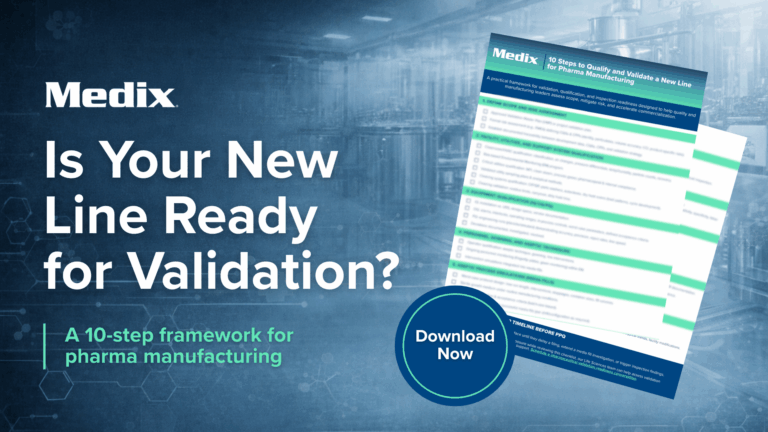
Medix’s Pharmaceutical Validation Readiness Checklist offers a practical framework for assessing validation scope, identifying risk, and preparing for PPQ, inspections, and continued process verification activities.
Building a Validation-Ready Organization
Technology, automation, and data analytics play important roles in modern validation programs. Better visibility helps teams trend data, spot variability, and support timely decision-making.
Still, tools don’t run CPV programs. People do.
Even the most sophisticated monitoring systems depend on teams that know how to interpret data, investigate anomalies, and make informed decisions when process performance begins to shift.
Maintaining validation throughout the product lifecycle often requires collaboration among:
- Validation Engineers
- Quality Assurance Professionals
- Process Engineers
- Manufacturing Leaders
- CQV Specialists
- Regulatory and Compliance Stakeholders
As organizations expand operations, launch new products, implement new equipment, or respond to remediation initiatives, access to specialized validation expertise and flexible pharmaceutical staffing support becomes increasingly important.
The strongest validation-ready organizations plan for that need before teams are stretched thin. They define ownership, protect bandwidth for monitoring and investigations, cross-train where possible, and supplement internal expertise when project timelines, audit pressure, or growth demands exceed available capacity.
That’s where workforce agility becomes part of validation strategy. It’s the support structure that helps teams execute consistently when the workload gets heavier.
Where CPV Goes From Here
Continued Process Verification has changed how pharmaceutical manufacturers think about validation.
PPQ still matters. It confirms the process is ready for commercial production. CPV carries that confidence forward by helping teams monitor performance, maintain compliance, and respond to risk as manufacturing evolves.
But for modern pharmaceutical manufacturers, stopping at PPQ leaves too much to chance. As operations grow more complex, organizations that invest in lifecycle validation and validation-ready teams will be better positioned to maintain product quality, support audit readiness, and scale with confidence.
From PPQ through continued process verification, Medix helps pharmaceutical manufacturers access specialized validation, quality, and engineering talent to support compliance, commercialization, and long-term operational success.
Frequently Asked Questions
Validation strategies should be reviewed whenever significant changes occur, including facility expansions, new equipment implementation, process changes, technology transfers, supplier changes, or new product introductions. These events can introduce variability that may require additional qualification, monitoring, or revalidation activities.
Many organizations struggle to balance ongoing monitoring requirements with competing operational priorities. Common challenges include resource constraints, documentation backlogs, inconsistent trend analysis, maintaining audit readiness, and ensuring quality and validation teams have the capacity to support growing manufacturing operations.
CPV helps organizations maintain documentation, monitoring records, and process performance data that demonstrate ongoing control. Effective CPV programs can make inspections smoother by providing clear evidence that manufacturing processes remain compliant, controlled, and capable throughout the product lifecycle.
Maintaining validation during growth often requires a combination of strong change control practices, risk-based monitoring, cross-functional collaboration, and access to specialized validation expertise. Organizations that proactively plan for increased validation workloads are often better positioned to support commercialization timelines while maintaining compliance.




Work with a Trusted Healthcare and Life Sciences Staffing Partner
Connect with Medix to get the expertise and resources you need to succeed.